How Does ChatGPT Actually Understand Your Questions?
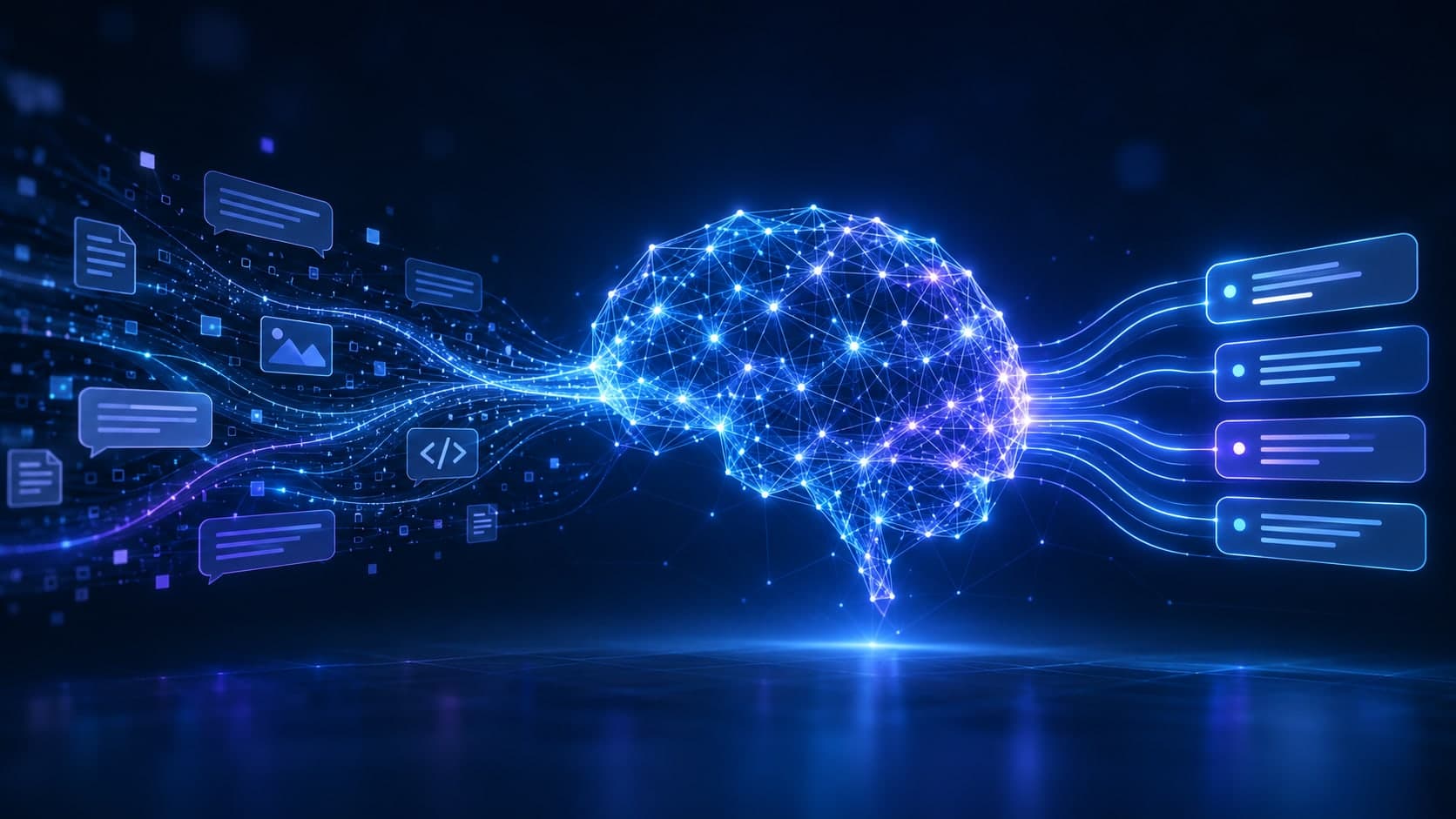
Have you ever wondered what happens when you open ChatGPT, type a question and receive an answer just a few seconds later?
You can ask it to explain a complicated topic, write code, translate a sentence or help you solve a problem. Somehow, it responds in a way that feels like you're talking to another person.
But how does a computer understand human language? Does ChatGPT actually understand what you're saying, or is something else happening behind the scenes?
The answer involves artificial intelligence, mathematics, neural networks and a technology called the Transformer architecture.
Let's explore how it all works, step by step, without getting lost in complicated technical terms.
What Exactly Is ChatGPT?
ChatGPT is an AI-powered conversational assistant developed by OpenAI.
It is powered by large language models (LLMs), which are trained to recognize patterns in language and generate useful responses.
Unlike traditional software, where developers write specific instructions for every possible situation, language models learn patterns from training data.
For example, a traditional calculator follows mathematical operations to calculate 25 + 25.
ChatGPT, on the other hand, can explain why the sky looks blue, write a JavaScript function or help you understand a complicated concept.
It doesn't work like a traditional search engine or a simple collection of predefined answers. It generates responses using patterns learned during training and the context provided to it.
How Does ChatGPT Read Your Questions?
When you type a question, ChatGPT doesn't directly process it like a human reading a sentence.
Your text first goes through a process called tokenization.
A token is a small piece of text that an AI model can process. It might represent an entire word, part of a word or even punctuation.
For example, consider this sentence:
"ChatGPT is incredibly useful."
A tokenizer might divide it into smaller pieces:
ChatGPT | is | incredibly | useful | .
This is an illustrative example; actual tokenization depends on the model.
These tokens are converted into numerical IDs that the AI model can process.
Think of tokenization as converting human language into a format that a computer can work with.
How Does AI Understand the Meaning of Words?
After tokenization, the model needs to process relationships between different pieces of text.
This is where embeddings become important.
An embedding is a numerical representation of a token that helps an AI model work with language patterns and relationships.
Consider these words:
King
Queen
Man
Woman
They have different meanings, but they also have relationships with each other.
Embeddings help represent these relationships mathematically.
For example:
"The bank approved my loan."
And:
"I sat near the river bank."
The word "bank" appears in both sentences, but its meaning is different.
By processing surrounding words and their relationships, the model can interpret the context more effectively.
This is one of the important building blocks behind modern language models.
The Technology Behind ChatGPT: Transformer Architecture
One of the biggest breakthroughs behind modern language models is the Transformer architecture.
Transformers were introduced in the research paper Attention Is All You Need, published in 2017.
A key mechanism in Transformers is called self-attention.
Imagine reading this sentence:
"The developer opened the application because it was not working."
When you read the word "it", you naturally connect it with the application.
Self-attention allows an AI model to calculate how different tokens relate to one another within the available context.
Instead of treating every word independently, the model can consider relationships between different parts of a sentence.
Transformers also use multiple attention heads, which help them learn different types of relationships.
In simple terms, self-attention helps the model look at the bigger picture rather than processing each word in isolation.
How Does ChatGPT Generate an Answer?
This is probably the most interesting part.
GPT-style language models generate text by predicting the next token based on the tokens that came before it.
Imagine typing:
"The capital of India is..."
The model processes the available context and estimates which token is likely to come next.
It might generate:
"New"
Then it processes the updated sequence and generates:
"Delhi"
The result becomes:
"The capital of India is New Delhi."
This process continues until the model generates a suitable ending.
In reality, these calculations are much more complex. The model considers many possible tokens and their probabilities before selecting the next one.
This is why ChatGPT can generate complete paragraphs, explanations and even programming code one token at a time.
How Does ChatGPT Remember Previous Messages?
Have you noticed that you can ask ChatGPT a follow-up question without repeating everything?
For example:
You: What is React?
ChatGPT: React is a JavaScript library used to build user interfaces.
You: What are its main advantages?
ChatGPT understands that "its" refers to React.
This works because the system can provide relevant previous messages as context when generating the next response.
The model uses this information to interpret your latest question.
However, there is a limit to how much information a model can process at once. This is called the context window.
The context window determines how much text and other supported information the model can consider during a single interaction.
This is different from human memory. The model relies on the context made available to it and, in some products, additional memory or retrieval features.
How Is ChatGPT Trained?
How does an AI model learn language patterns in the first place?
Training is one of the most important stages in building a language model.
1. Learning from Data
The model is trained using large datasets containing text and, depending on the model, other types of information.
It learns patterns, relationships and structures from this data.
2. Predicting Tokens
A common training approach for GPT-style models is next-token prediction.
For example:
"JavaScript is a programming..."
The model learns to predict an appropriate continuation.
During training, its predictions are evaluated and its internal parameters are adjusted to improve performance.
3. Improving Responses
Pretraining alone doesn't automatically make a model a helpful assistant.
Additional training techniques, such as supervised fine-tuning and preference-based training, help improve instruction following and response quality.
The goal is to create a model that can respond helpfully to different types of questions and instructions.
Why Does ChatGPT Sometimes Give Wrong Answers?
Despite its impressive capabilities, ChatGPT isn't perfect.
Sometimes it generates answers that sound confident but contain incorrect information.
This behaviour is commonly called an AI hallucination.
It can happen because:
The model generates incorrect facts.
Information may be outdated.
It may misunderstand complicated questions.
It can invent references or sources.
Generated code may contain errors.
A language model doesn't automatically verify every statement against a reliable database.
That's why important information should always be reviewed, especially when using AI for professional, financial or technical decisions.
AI is a powerful assistant, but human judgment still matters.
Does ChatGPT Search the Internet for Every Answer?
No. This is a common misunderstanding.
A language model can generate answers using patterns and information learned during training without searching the internet.
However, some AI experiences also have access to external tools such as:
Web search
Code execution
External APIs
File analysis
For example, asking "What is JavaScript?" can be answered using the model's learned knowledge.
But asking "What are today's latest technology announcements?" may benefit from web search.
The language model and external tools are separate components that can work together to provide more useful answers.
ChatGPT might feel like a human conversation partner, but the technology behind it is very different from the way humans think.
It uses tokenization, embeddings, Transformer architecture, neural networks and next-token prediction to process language and generate responses.
What makes this technology especially interesting is that it can learn complex language patterns and use them across many different tasks.
And we're still discovering new ways to use these models in software development, education, research and everyday life.
The next time you ask ChatGPT a question, remember that there's an incredible amount of mathematics and engineering happening behind that simple chat box.
Sometimes, the most impressive technology is the technology we don't even notice.
Recommended articles for you.
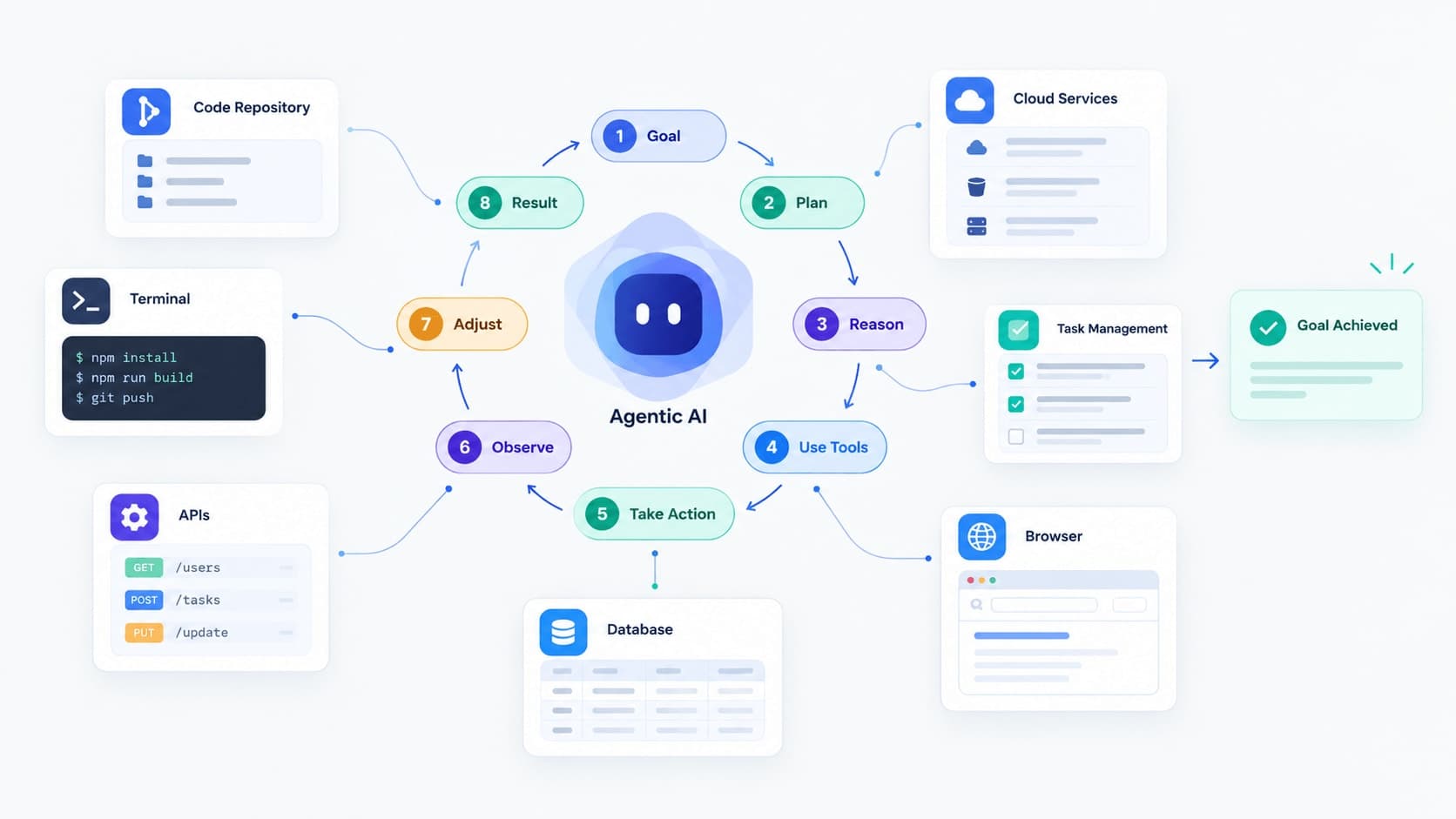
What Is Agentic AI and Why Is Every Developer Talking About It?
AI is moving beyond chatbots and code completion. Learn what Agentic AI actually is, how AI agents work, and why they are changing the way developers build software.
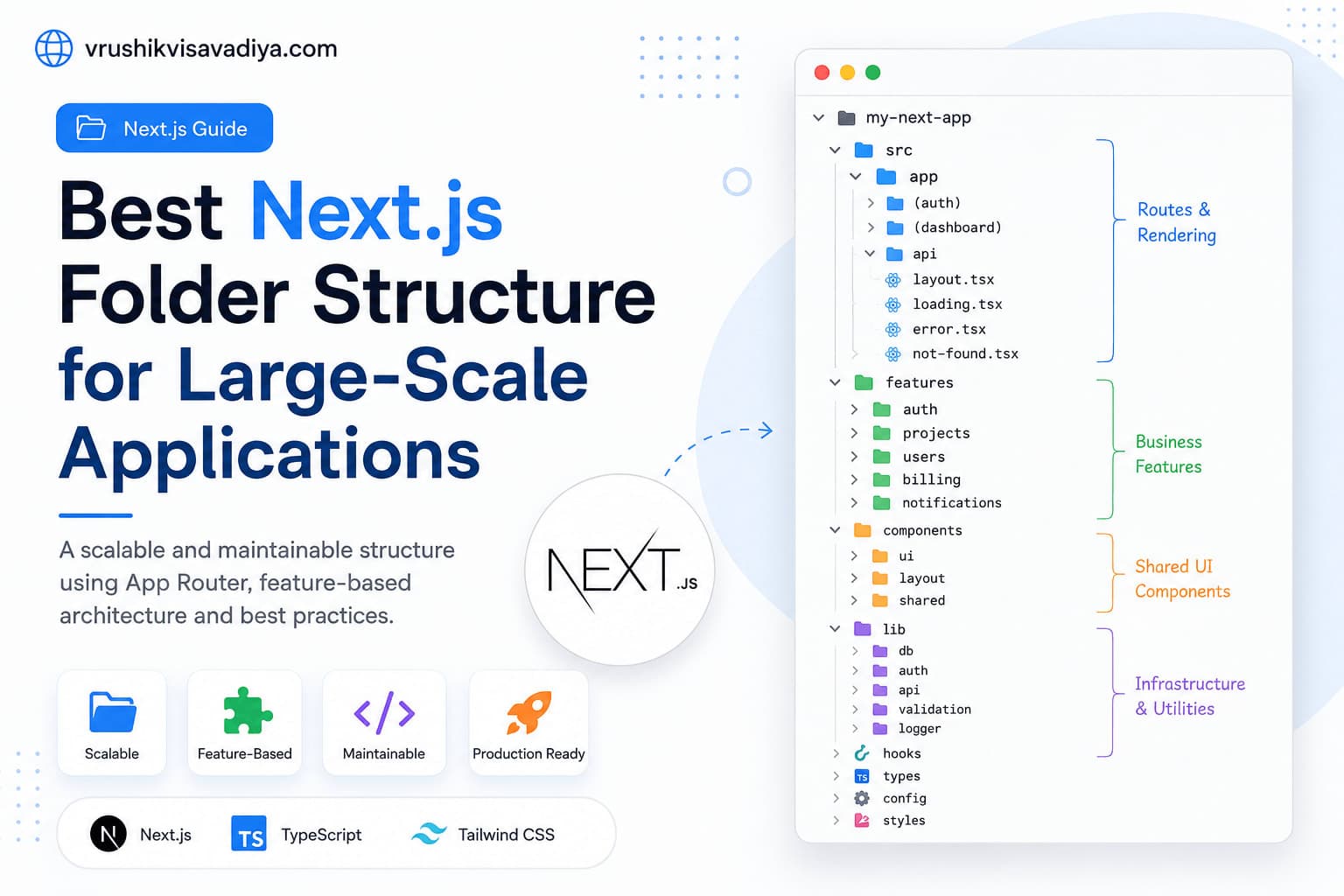
Best Next.js Folder Structure for Large-Scale Applications
A scalable and maintainable Next.js folder structure using the App Router, feature-based architecture, Server Components, shared UI, and clear separation of business logic.

Why Every React Native Developer Should Learn TanStack Query
Managing API calls with useEffect and multiple useState variables quickly becomes difficult as React Native applications grow. In this guide, you'll learn why TanStack Query is the best solution for server state management, how it simplifies data fetching, caching, mutations, and offline support, along with practical examples for production-ready React Native apps.